The Jewish Holidays in Februart 2026
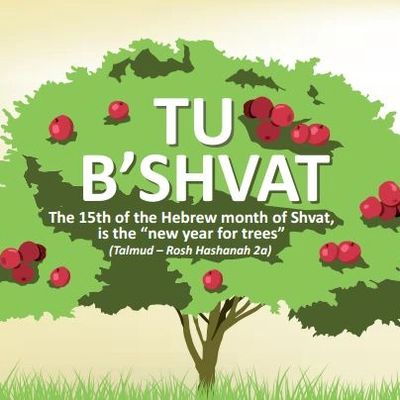
Tu b'Shvat: 15 Shvat/February 2, 2026
Tu b’Shvat is considered the birthday for trees, which signifies the rebirth in nature. This holiday is barely mentioned in the Talmud, other than in a debate between Shammai (who said that this holiday should be on the 1st day of the month of Shevat) and Hillel (who declared that the 15th was the right day - as per usual, Hillel prevailed). (See Jerusalem Talmud, Tractate Rosh Hashonah, page 1).
The Torah does not identify Tu B'Shvat as a holiday, however it states that the age of fruit trees has significance. In Leviticus 19:23-25, the text reads: When you come to the land and you plant any tree for food, you will treat its fruit as unconsecrated; three years it will be unconsecrated to you and not eaten. And in the fourth year, all of its fruit shall be holy, praising YHVH. And in the fifth year, you will eat its fruit, to gather for yourself its produce I am YHVH your G-d.
The Torah also tells us that even in battle in a foreign country, we do not destroy its fruit trees, because they provide food (Deuteronomy 20:19).
In order to calculate the age of fruit trees, all trees are considered "born" on Tu b'Shvat in the year in which they are planted.
In the 17th Century, the Kabbalists of Sefat, Israel developed a Tu B'Shvat seder, in which a variety of fruits are eaten: (a) those with an inedible exterior and an edible interior (i.e., oranges, bananas, coconuts); (b) those with an edible exterior but inedible interior (i.e olives, avocados); (c) those that can be eaten in their entirety (i.e., seedless grapes, raisins, strawberries). Like the Passover seder on which the Tu B'Shevat Seder is modeled, participants drink four cups of wine. However, the wine is a combination of white and red: the first cup is white, the second is a blend with some red, the third is primarily red wine with some white, and the fourth cup is all red wine. This symbolically takes us from winter to spring.
The Kabbalists connect the fruit trees of Tu b’Shvat with the Tree of Life in the Garden of Eden.